
If you were numbed, wait until feeling returns before coffee: you can’t judge heat and can bite your cheek. The cement is probably not the limit: the instructions for one crown cement, RelyX Luting Plus, say it is completely set 5 minutes after placement, but other cements differ. Your dentist knows which they used, so follow their advice over ours.
The FDA-approved label for lidocaine with epinephrine, a dental local anaesthetic, says: “The patient should be advised to exert caution to avoid inadvertent trauma to the lips, tongue, cheek mucosae or soft palate when these structures are anesthetized. The ingestion of food should therefore be postponed until normal function returns” (DailyMed prescribing information). If you were numbed for your crown, wait until normal feeling has come back before you eat or drink anything, and that includes coffee.
Two sources, two halves of the reason. A clinical reference chapter on dental local anaesthesia notes that “patients should be warned that soft tissues such as lips, cheeks, and tongue can still be numb following dental treatment… There is a risk of patients biting these soft tissues due to poor sensory feedback, leading to soft tissue trauma,” and that the anaesthetic provides “temporary sensory loss” against stimuli that are “mechanical, thermal, or chemical” (StatPearls, Local Anesthesia Techniques in Dentistry and Oral Surgery). Thermal is the word that matters for a hot drink: the block that stops you feeling the drill also stops you feeling that a coffee is too hot.
Be clear about what is quoted and what is inference. The FDA label’s stated hazards are trauma and eating; neither it nor the StatPearls chapter uses the word “scald”. The closest published wording we found spelling it out is an NHS trust’s leaflet for patients after tooth extraction under local anaesthetic: “You will be numb after the procedure from the local anaesthetic so soft and bland foods are advisable for the first 12 hours. Avoid eating anything hot until the numbness has worn away” (University Hospitals Sussex NHS Foundation Trust). That leaflet is written for extractions rather than crowns, but the anaesthetic and the numbness are the same.
Table of Contents
Does the cement stop me drinking coffee?
Not for long, if your dentist used a cement like the one whose instructions we found. For 3M ESPE RelyX Luting Plus, a resin-modified glass ionomer luting cement indicated for cementing crowns and bridges, the instructions for use (© 3M 2003, revision 1/04) tell the dentist: working time is “2.5 minutes at 23°C/73°F”; remove excess cement “when it has reached a waxy stage after 2 minutes from placement in the mouth”; and “finish restoration and check occlusion when material has completely set after 5 minutes from placement in the mouth.” Five minutes, in the mouth, and the dentist is already checking your bite against it. (Instructions for use, document 44-0007-4140-3-B; the copy we read is a verbatim 3M ESPE-branded PDF hosted by a dental trade site rather than by 3M, which is worth knowing when you weigh it.)
The limits on that. This is one product and one chemistry. Dentists use several kinds of luting cement (zinc phosphate, glass ionomer, resin-modified glass ionomer, self-adhesive resin), and they do not all behave identically; some resin cements are light-cured to a hard set in seconds, others set chemically over a longer period. We are not claiming every cement is finished in five minutes. We found no source for the idea that a hot drink softens a permanent crown’s cement for a day or two afterwards, and at least one crown cement is completely set before you have left the chair. If you want the number for your crown, the person who knows it is the dentist who mixed the cement. Ask which cement they used and how long they want you off that side.
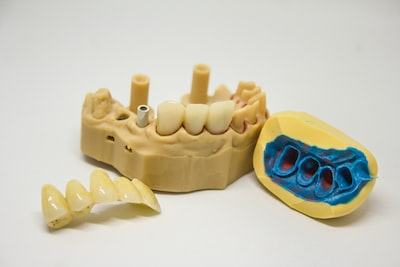
Neither the American Dental Association’s consumer page on crowns nor Cleveland Clinic’s page on dental crowns gives an aftercare time: no hours before eating, no hours before hot drinks. Cleveland Clinic’s nearest statement is that “it’s normal to experience some degree of sensitivity for a couple of weeks”, especially to heat and cold. The 24-hour figure that circulates on dental practice blogs is in neither. That is the same situation we found for coffee after teeth whitening, where the widely repeated 24 to 48 hours is a conservative aftercare convention and the ADA’s whitening guidance gives no figure either.
Can I drink coffee with a temporary or a permanent crown?
A temporary crown and a permanent crown are different questions, and the advice differs.
- A temporary crown is meant to come off. It is held on with a temporary cement so the dentist can remove it at the next visit; the RelyX instructions above include a step to “remove the temporary restoration and thoroughly clean the preparation of any temporary cement residue using an oil-free pumice paste.” So while you are wearing a temporary: avoid sticky and chewy things on that side, do not floss up and out around it, and expect it to feel slightly odd. Colgate’s patient page on temporary crowns, a toothpaste maker’s consumer page rather than a professional body, says to “avoid eating or drinking for 30 minutes while the cement sets” and “Be careful when eating or drinking something hot or cold. Your crowned tooth can be more sensitive” (Colgate). If it comes off, keep it and phone the practice; that is a call, not an emergency.
- A permanent crown is meant to stay on. Once the cement has set and your bite has been checked, it is a tooth. The restrictions people repeat about permanent crowns (24 hours of soft food, no hot drinks) are more conservative than the one set of cement instructions we found requires.
What about whitening, stains or an extraction?
Each has its own page. For coffee after whitening, see how long after teeth whitening you can drink coffee.
Whitening and a crown are not the same problem. Whitening aftercare is about pigment: avoiding dark drinks while freshly bleached enamel may take up stain more easily. A crown is a manufactured restoration cemented onto a prepared tooth; the question there is the cement and the anaesthetic, not pigment. For long-term staining of your natural teeth, we have a separate page on avoiding coffee stains on teeth. And if you have had an extraction rather than a crown, the constraint is different again: see coffee after wisdom teeth removal, which is about protecting a blood clot.

What should I do on the day?
- While you are numb: nothing hot, nothing to eat, and do not test the numbness by biting it. The FDA label’s instruction is to postpone the ingestion of food until normal function returns. Cool water is fine.
- Once sensation is fully back, coffee is reasonable — at a temperature you would drink it at anyway. If the tooth is sensitive, let it cool further; sensitivity to hot and cold after a crown is common and usually settles.
- Chew on the other side for the rest of the day if the crown is new, which costs you nothing and covers the range of cements you might have had.
- Follow your dentist’s instruction over this page where the two differ. They know which cement they used and how much tooth was left to bond to; we do not.
When should I phone the dentist?
- Numbness that has not worn off, or a rash. The FDA label says to advise patients “to consult the dentist if anesthesia persists or if a rash develops.” Prolonged numbness is not something to wait out.
- A bite that feels high. If the crown feels like it hits first, that is adjustable in minutes and painful to ignore.
- Pain that gets worse over days rather than better, or throbbing that wakes you.
- A crown that comes off — keep it, do not try to glue it back, and call.
- Facial swelling, fever, or difficulty swallowing or breathing. That is urgent care, not a dental appointment next week.
Corrections to earlier versions of this page
- Numbness. An earlier version mentioned the anaesthetic only in its FAQ: “It’s recommended to wait until the anesthesia wears off before eating to avoid biting your cheek or tongue”. That was true, but it was about biting and said nothing about a hot drink. The numbness advice now opens the page.
- The 24 hours. An earlier version said, twice, that “most dentists advise waiting at least 24 hours before drinking coffee,” and that “the heat can potentially soften the cement before it has a chance to fully harden.” Its FAQ said the cement takes “24 to 48 hours” to set. None of that was sourced, and the one set of cement instructions we found does not support it.
- A whitening paragraph. An earlier version had a paragraph about coffee after teeth whitening (dark pigments, staining a “newly brightened smile,” a 24-hour wait) in the middle of the section on crown cement. Its 24 hours contradicted the 24 to 48 hours on our whitening page, and it has been removed.
- Temporary and permanent crowns. An earlier version treated a crown as one thing; the advice differs, as set out above.
Disclaimer: This article is general information, not medical advice or dental advice. Cements, crown materials and the amount of remaining tooth structure vary from case to case, and the instructions given by the dentist who fitted your crown take precedence over anything here. The anaesthetic guidance quoted is from the FDA-approved labelling for one commonly used dental local anaesthetic; if you were given a different agent, or no anaesthetic at all, ask your dentist what applies to you.