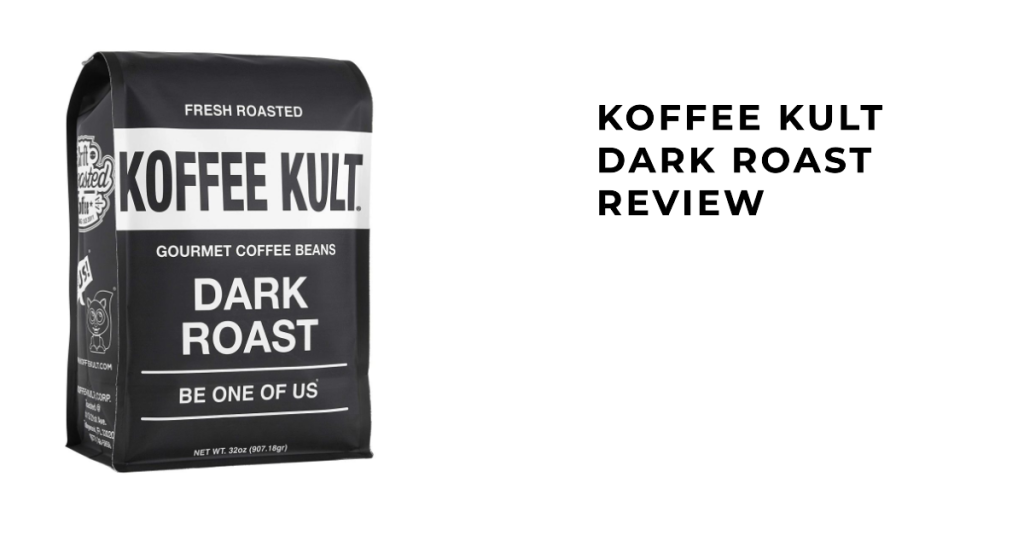
Nobody at this site has brewed, tasted or measured Koffee Kult Dark Roast, so this page is a sourced summary, not a review. Koffee Kult gives its own cupping notes for the blend as “Cinnamon, Caramel, Chocolate, Nutty” and its origins as “Colombia, Guatemala, Brazil, and Indonesia”; everything describing the coffee here is quoted from the roaster.
This page also lists what the roaster does not disclose. If you want to know how it tastes to you, this page cannot tell you, but it can stop you buying on the strength of tasting notes that were invented.
Table of Contents
What Koffee Kult publishes
Read from the roaster’s own product page for this coffee on 12 August 2026. Note that the product now carries a name it did not have when this page was first written: it is listed as “Dark Roast: Midnight Velvet (Signature Blend)”.
| Specification | What Koffee Kult states |
|---|---|
| Product name | Dark Roast: Midnight Velvet (Signature Blend) |
| Species | “100% Arabica” |
| Origin | “Colombia, Guatemala, Brazil, and Indonesia” |
| Roast level | “Dark” |
| Cupping notes | “Cinnamon, Caramel, Chocolate, Nutty” |
| Roast profile | “brought exactly to the second crack to develop its full, resonant character before being flash-cooled” |
| Roast date | “every bag roasted at KoffeeKult.com is stamped with a roast date” |
| Roastery | “Roasted to order in small batches at our Hollywood, FL roastery and shipped the same day” |
| Certifications | None claimed on the product page |
Two of those lines are worth reading carefully. “Cupping notes” are what a taster perceived, not an ingredient list — nothing has been added to the coffee, and cinnamon and caramel are descriptions of a smell and a taste. How that vocabulary works, and where it comes from, is set out on our page on coffee flavor profiles and tasting. And “100% Arabica” is a claim about the species in the bag rather than about quality; Arabica coffee beans explains what it does and does not commit a roaster to.
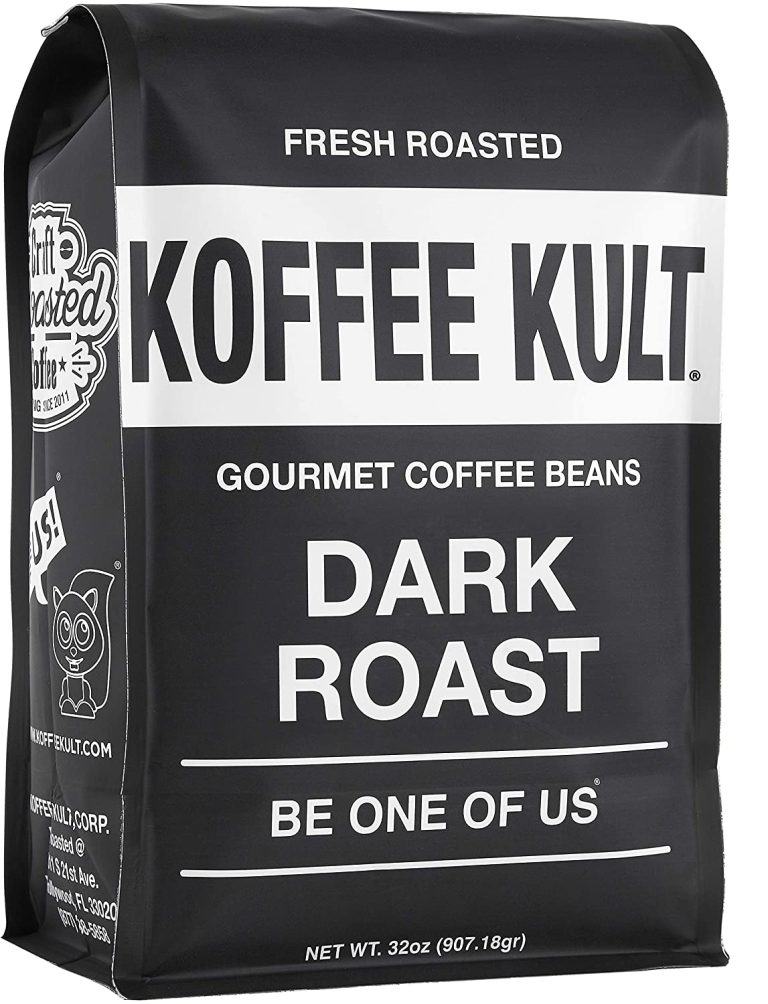
What is not known
- The blend proportions. Four origins are named and no percentages are given anywhere we could find. The old page’s country-by-country descriptions of what each origin contributed to the cup were guesswork and have been removed.
- Variety, altitude, processing and harvest. None of these are published for the blend, and all of them change the cup more than the roaster’s name does.
- How old the bag in front of you is. A stamped roast date solves this — once you have the bag. It cannot be known before you buy.
- How it compares with anything else. No comparison was run, so no comparison is stated.
- How it tastes to you. No published specification predicts that.
If you want this tested properly
A real test of a bag of coffee is short and repeatable, and it produces numbers rather than adjectives. Anyone with a scale reading to 0.1 g and a timer can run it. If this page is ever updated with first-hand results, this is the protocol they will have come from:
- Record the roast date stamped on the bag, the date you opened it, and where and when you bought it.
- Photograph the beans dry, in daylight, so the surface can be seen. That settles the oily-or-not question without an opinion.
- Brew at the house reference of 55 g of coffee per 1.000 kg of water — about 1:18 by weight — recording the dry dose to 0.1 g, the water mass, the grind setting as a number on your grinder, the water temperature, and the total brew time. Remember that a coffee “cup” means 6 fluid ounces, and that stronger coffee means more coffee, not less.
- Taste it against a named second coffee brewed the same way in the same session. A note recorded without a comparison is almost impossible to calibrate.
- Repeat on three separate days before writing anything down as a property of the coffee.
Until those numbers exist, this page will keep saying it has not tasted the coffee. The equipment that protocol assumes is covered, without any tested endorsements, on our page about brewing tools and accessories.
Where to buy it — read the disclosure first
The links below are paid links. If you buy through one, this site earns a commission and your price is unchanged. As an Amazon Associate I earn from qualifying purchases. This coffee has not been bought, brewed or tasted by us, and this is not a recommendation. The link is here because the page is about this specific product. The Federal Trade Commission’s Endorsement Guides say that “In any communication using an interactive electronic medium, such as social media or the internet, the disclosure should be unavoidable” (16 CFR § 255.0(f)), which is why this paragraph sits directly above the link rather than in a footer.
- Koffee Kult Dark Roast whole bean, 32 oz, on Amazon
- Buying direct from Koffee Kult is the only route on which the roaster makes the stamped-roast-date claim. That link is not an affiliate link and earns this site nothing.
This coffee also appears, on the same untested basis, in our list of coffee beans for latte. That page links to the same product page as this one, and the origin and cupping notes here come from it.
Corrections to earlier versions of this page
The earlier version of this page was written as though the site had drunk the coffee. It said “We were particularly impressed by the rich, full-bodied flavor and the freshness of the beans“, and “We liked it so much that we included it in the” latte round-up. It described a first sip, an aroma filling the room, and a specific set of flavour notes. None of that happened. No bag was bought, no dose was weighed, no brew was made, and no note was tasted. Every first-person experience claim has been deleted from this page and none of it has been replaced with a differently-worded version of the same thing.
The Federal Trade Commission’s Endorsement Guides, its published reading of the law it enforces, put it briefly: “Endorsements must reflect the honest opinions, findings, beliefs, or experience of the endorser”, and “An endorsement may not convey any express or implied representation that would be deceptive if made directly by the advertiser” (16 CFR § 255.1(a)).
The page contradicted itself about the beans
This is the clearest proof that nobody looked at the beans. One section said “The beans are not oily, a sign of freshness and quality“. A later section, praising the same coffee, said “The beans are dark, rich in color with the right amount of oil, indicating a well-executed roasting process“. A third sentence said the beans stay fresh “as Koffee Kult does not use oil on its beans” — roasters do not apply oil to beans in the first place; the oil on a dark roast comes out of the bean.
The published description of a dark roast settles it. The National Coffee Association writes that a dark roast “produces shiny black beans with an oily surface and a pronounced bitterness”, against a medium roast that is “medium brown in color with a stronger flavor and a non-oily surface” (NCA, coffee roasts). Koffee Kult says this coffee is “brought exactly to the second crack”. A visibly oily surface is the expected result of that, not a fault and not a sign of staleness. Our page on why some coffee beans are oily covers the mechanism, and coffee roast levels covers what dark roasting does to acidity and bitterness.
Six more claims that were wrong or unsupported
- The tasting notes were not the roaster’s. The page said “The flavor notes are a harmonious blend of cacao, cherry, and cinnamon” and then spent a paragraph explaining what each of those three did in the cup. Koffee Kult’s own cupping notes for this coffee are “Cinnamon, Caramel, Chocolate, Nutty”. Cherry is not on the roaster’s list, and nobody here tasted it. The invented notes are gone.
- The origin list was out of date. The page called it “a blend of Colombian, Sumatra, and Guatemala specialty coffee beans“. Koffee Kult’s own product page gives the origin as “Colombia, Guatemala, Brazil, and Indonesia”. Sumatra is in Indonesia, so that part is not contradicted, but Brazil was missing entirely.
- The certification claims are not on the roaster’s page. The old page said the beans “are sourced fair trade” and were “organically grown“. On Koffee Kult’s own product page for this coffee, read on 12 August 2026, no fair-trade, USDA Organic, Rainforest Alliance or kosher claim appears at all. Until the roaster moved the page, its URL contained the words “sourced fair trade” from an older product title, and third-party retail listings still carry the phrase “Organically Sourced”. A marketing phrase is not a certification. The NCA’s page on coffee certifications sets out what the actual programmes require and who audits them; if a certification matters to you, look for the certifier’s mark, not the adjective.
- The “no roast date” complaint contradicts the roaster. The page listed “Lack of Roast Date” as a drawback and said “The absence of a roast date on the packaging is a downside“. Koffee Kult states that “every bag roasted at KoffeeKult.com is stamped with a roast date” and that coffee is “Roasted to order in small batches at our Hollywood, FL roastery and shipped the same day”. That claim covers bags bought from the roaster; a bag that has sat in a third-party warehouse is a different question, and neither we nor the roaster can tell you how long any particular bag has been in one.
- The price and the per-ounce figure had no source. The page said the coffee was “priced at approximately $29.99 for a 2-pound bag, which equates to approximately $0.94 per ounce“. No date, no seller, no link. It also claimed a subscription saving of “up to 15%” with no source; the roaster’s product page now offers 15% off by subscription. Prices move, we are not tracking them, and this page now quotes no prices at all.
- The ratings figure and the comparison table are deleted, not corrected. “A rating of 4.4 out of 5 stars from over 6,800 ratings on Amazon” was undated and unverifiable at the time of writing. A four-brand comparison table gave flavour notes for three coffees nobody here has tasted, priced them in dollar signs, and listed Koffee Kult’s origin as “USA” — which is where the beans are roasted, not where any of them are grown. All of it is gone.
The affiliate links
The old version of this page carried two shortened Amazon redirect links, which hide the affiliate tag from anyone trying to check who is being paid. Both have been replaced with the full Amazon product URL in the Where to buy it section above, on this site’s own tag, so the destination and the tag are readable in the link itself.