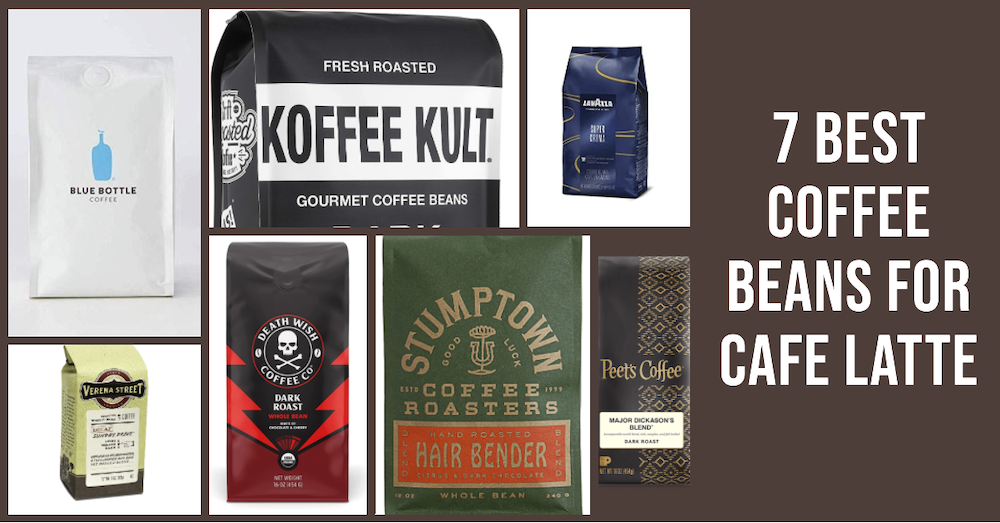
A latte is mostly milk, so the coffee has to survive dilution, which points at espresso blends and medium-to-dark roasts. Below are the seven coffees this page has always linked to, described from what each roaster publishes. Nothing on this page has been tasted by us; the note on that is further down.
Correction, because the old version of this page made a health claim that was false. It described a decaf coffee as having “a rich, smooth flavor and no caffeine.” Decaf coffee is not caffeine-free. The FDA’s consumer page on caffeine carries the heading “‘Decaffeinated’ Does Not Mean Caffeine-free” and states: “Decaffeinated coffees and teas have less caffeine than their regular counterparts, but still contain some caffeine,” and “decaf coffee typically has 2 to 15 milligrams in an 8-fluid-ounce cup” (FDA, Spilling the Beans: How Much Caffeine is Too Much?). If you have been told to eliminate caffeine for a medical reason, decaf is a reduction, not an elimination — check with the person who told you.
Affiliate disclosure — read this before the links. Every product link on this page is a paid link, and they run through more than one network: Amazon and Commission Junction (the Peet’s link). A ShareASale link to Death Wish direct was also carried at one point; it is now inactive and has been removed, as noted below. As an Amazon Associate I earn from qualifying purchases. If you buy through any of these links the site may be paid a commission; the price you pay is unchanged. None of these are tested endorsements. This disclosure is repeated next to the links themselves rather than left in a footer, because the FTC’s Endorsement Guides require that “In any communication using an interactive electronic medium, such as social media or the internet, the disclosure should be unavoidable” (16 CFR 255.0(f)).
Table of Contents
What actually matters in a latte bean
Milk mutes acidity and adds sweetness and body. A light, delicate, high-acid coffee that is lovely black will often disappear underneath it. That is why espresso blends — usually medium to dark, often with some robusta for body and crema — are the default for milk drinks, and why arabica-only light roasts are the harder choice. Neither is “correct”; they are different targets. If you want the difference between the drinks themselves, see coffee vs. latte and roast levels.
Seven coffees people buy for lattes
What follows is either quoted from the roaster’s own current product page, or explicitly marked as unverified where the roaster’s page could not be opened on 11 August 2026.
| Coffee | Roast level | Species / blend | Origin | Decaf method | Package size | List price |
|---|---|---|---|---|---|---|
| Lavazza Super Crema | Medium | Arabica and Robusta — no percentage given | Asia, South America | — | 10.5 oz whole bean | $11.99 |
| Koffee Kult Dark Roast (Midnight Velvet) | Dark | 100% Arabica | Colombia, Guatemala, Brazil, Indonesia | — | 12 oz whole bean | $25.00 |
| Blue Bottle Bella Donovan | Dark | Organic blend; species not published | Ethiopia (natural processed); other origins not published | — | not published | $23 (one bag) |
| Stumptown Hair Bender | not published | not published | Central and South America, East Africa, Indonesia | — | 12 oz whole bean | $19.00 |
| Death Wish Coffee Dark Roast | Dark | Arabica and Robusta blend | not published | — | 16 oz whole bean | $19.99 |
| Peet’s Major Dickason’s Blend | Dark | Signature Blend — Arabica/Robusta split not published | Americas, Indo-Pacific | — | 16 oz whole bean | $21.95 |
| Verena Street Sunday Drive Decaf | Medium | 100% Arabica | not published | Swiss Water Process (99.9% caffeine-free per brand) | 2 lb whole bean | $28.00 |
1. Lavazza Super Crema
An Italian espresso blend of arabica and robusta, widely sold as a milk-drink bean. What Lavazza publishes: its US product page describes the blend as offering “a full-bodied, harmonious experience, with notes of roasted hazelnut and brown sugar”, and lists it as Arabica and Robusta without giving percentages — so the 60/40 split the old version of this page stated is still unsourced and is not repeated. Nothing here was tasted by us. We have a longer page on this coffee: Lavazza Super Crema.
Paid link — as an Amazon Associate I earn from qualifying purchases. Not a tested endorsement. Lavazza Super Crema on Amazon
2. Koffee Kult Dark Roast
A dark roast sold by a Florida roaster. What Koffee Kult publishes: its own product page gives the cupping notes as “Cinnamon, Caramel, Chocolate, Nutty” and the origin as “Colombia, Guatemala, Brazil, and Indonesia”. Those are the roaster’s words, not a tasting note of ours. Our separate write-up is at Koffee Kult Dark Roast.
Paid link — as an Amazon Associate I earn from qualifying purchases. Not a tested endorsement. Koffee Kult Dark Roast on Amazon
3. Blue Bottle Bella Donovan
Verified against the roaster’s page. Blue Bottle calls Bella Donovan “our take on the classic Moka-Java profile” and says “We rely on a natural processed Ethiopian coffee to add a fruity edge amid a base of bold flavors.” Its published tasting notes are “Raspberry, Chocolate, Molasses”, it is sold as a dark roast, and Blue Bottle says it “shines black or accompanied with milk or cream” (bluebottlecoffee.com, checked 1 October 2026). An earlier version of this page listed marshmallow among the notes; Blue Bottle’s own notes say molasses.
Paid link — as an Amazon Associate I earn from qualifying purchases. Not a tested endorsement. Bella Donovan on Amazon
4. Stumptown Hair Bender
Verified against the roaster’s page. Stumptown describes Hair Bender as “Our most complex espresso blend” and says it “brings together coffees from Central and South America, East Africa, and Indonesia.” Its published tasting notes are “Citrus, Dark Chocolate, Raisin” (stumptowncoffee.com, checked 11 August 2026). Being sold as an espresso blend is the relevant fact for a latte.
Paid link — as an Amazon Associate I earn from qualifying purchases. Not a tested endorsement. Hair Bender on Amazon
5. Death Wish Coffee Dark Roast
Marketed on caffeine content. What Death Wish publishes: its own product page states that the dark roast “contains approximately 180mg of caffeine based on a 6oz serving following brewing instructions on the package”. For scale, the FDA cites 400 mg a day as an amount not generally associated with negative effects for healthy adults, so that is a substantial figure for a single cup — see our page on how long coffee bloat lasts for the FDA numbers in context. Nothing here was tasted by us, and “more caffeine” is a separate question from “tastes good under milk”.
Paid link. As an Amazon Associate I earn from qualifying purchases. This is not a tested endorsement. (An earlier version also carried a ShareASale link to Death Wish direct; that link is now inactive and has been removed.) Death Wish on Amazon
6. Peet’s Major Dickason’s Blend
Verified against the roaster’s page. Peet’s lists Major Dickason’s as roast type “Dark” with a flavour profile of “Earth, Spice”, and lists espresso among the grinds it sells it in (peets.com, checked 11 August 2026). The old page called its finish “lively, acidic” — that is not what the roaster says, and it has been removed.
Paid link — this is a Commission Junction affiliate link and the site may be paid a commission. Not a tested endorsement. Major Dickason’s at Peet’s
7. Verena Street Sunday Drive Decaf — and what “decaf” really means
This is the product the old page said had “no caffeine.” Verena Street’s own product page says the opposite of that. It states the coffee is decaffeinated by the Swiss Water Process, which it describes as using “water, temperature and time to create a coffee that is 99.9% caffeine-free” (verenastreet.com, checked 11 August 2026). 99.9% is not 100%. The vendor’s own number and the FDA’s 2–15 mg per 8 fl oz range point the same way: a decaf latte contains caffeine.
That matters more here than on any other coffee page, because people drink decaf on instruction — pregnancy, arrhythmia, reflux, anxiety disorders, interacting medication. “Less” is the honest word. “None” is not. There is more on how the process works on our decaf coffee beans page.
Paid link — as an Amazon Associate I earn from qualifying purchases. Not a tested endorsement. Sunday Drive Decaf on Amazon
Nothing on this page was tasted
The previous version of this page read as a taste test. It was not one. No coffee named here was brewed, tasted, or compared by anyone writing it, and the ranking from one to seven was not the output of any comparison. Where a roaster publishes tasting notes we have quoted them and named the roaster; where we could not open the roaster’s page we have said so and left the space empty rather than filling it. If you want a flavour judgement, buy a bag and make one.
Making the latte
A latte is espresso plus steamed milk with a thin layer of foam. Without an espresso machine, the usual substitute is a small volume of strongly brewed coffee. If you are brewing rather than pulling shots, the house reference is 1:18 by weight — 55 g of coffee per 1 litre of water, the brew ratio in SCA Standard 310-2021, and stronger means more coffee, not less. A coffee “cup” is 6 fl oz (about 177 ml), so one cup at 1:18 is roughly 10 g of coffee. For water temperature, see brew temperature.
- Pull a shot of espresso, or brew a small, concentrated volume of coffee.
- Heat milk to steaming, not boiling — boiled milk tastes scalded and will not hold foam.
- Froth it with a steam wand, a hand frother, or a whisk.
- Pour the milk into the coffee and spoon the foam on last. Sweeten to taste.
Grind size matters more than bean choice at this stage: espresso needs a fine, even grind, and a blade grinder will not give you one.
Disclaimer. This page is general information about coffee, not medical advice. It is not a substitute for guidance from a doctor, pharmacist or midwife. If you have been advised to limit or eliminate caffeine — in pregnancy, for a heart rhythm condition, for reflux or anxiety, or because of a medication you take — follow that advice and ask the person who gave it how decaf fits into it. Nothing on this page was tasted, brewed or measured by us.
Corrections to earlier versions of this page
An earlier version gave each of these coffees a paragraph of first-person tasting notes (“the moment it hits your palate,” “buckle up for the ride”). Those were written without anyone tasting the coffee, and they have been deleted. Corrections that concern a single coffee are noted next to it above, and the correction about decaf is near the top of the page.