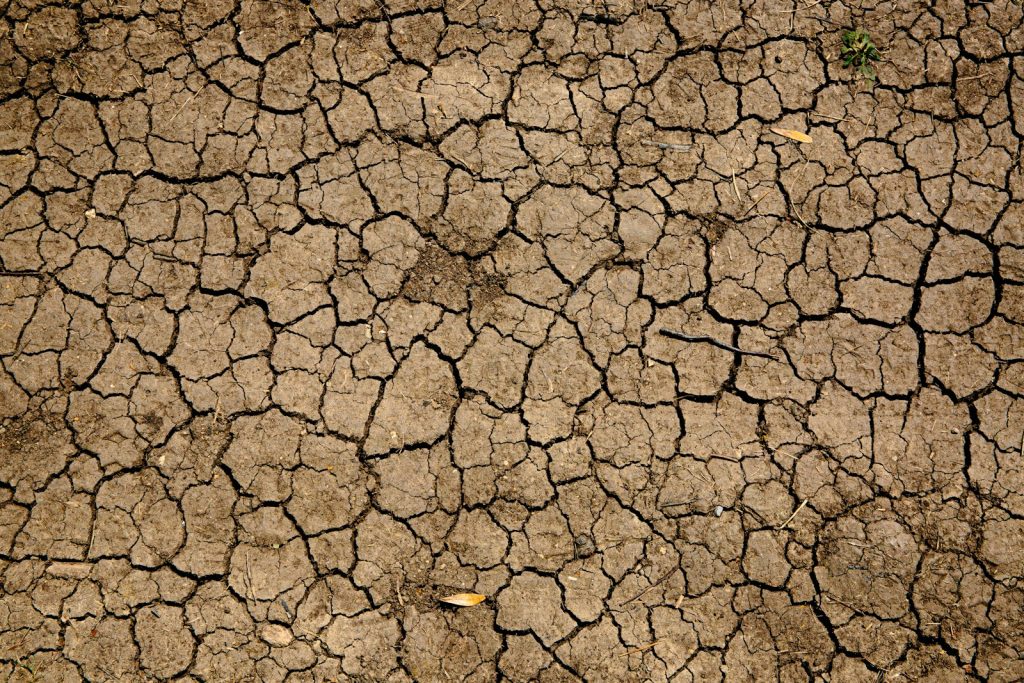
Arabica grows in a narrow temperature band, and that band is moving uphill. The International Coffee Organization’s summary of a 2015 modeling study projects that about half of the area now used for coffee could become unsuitable by 2050 across all three emission scenarios, while new land, mostly at higher elevations, becomes suitable, in Asia mostly under forest.
So this is a redrawing of the map rather than a straight subtraction. Alongside the heat, a mechanism already doing damage is Hemileia vastatrix, coffee leaf rust, whose sporulation rises steeply with temperature.
Table of Contents
Why arabica is the fragile one
Arabica is a highland species that wants a cool, even mean annual temperature. The most precise recent figure comes from the team that described the heat tolerance of a wild West African relative. Their 2021 Nature Plants paper reports that Coffea stenophylla grows and crops at mean annual temperatures 6.2 to 6.8 °C higher than arabica; writing up their own study, the authors give the absolute figure as 24.9 °C for stenophylla, “a staggering 6.8 °C higher than Arabica” — which places arabica at roughly 18 °C mean annual temperature. Our page on stenophylla versus arabica covers both the paper and that write-up, including the point that this is a mean annual temperature for the climate the plant lives in, not a peak temperature it survives.
The modelling agrees about which variable does the damage. The ICO’s review of Bunn et al. (2015) records that “the most important climate parameter affecting the suitability for Arabica cultivation is the mean temperature of the warmest quarter in a given year. For Robusta, which is known to be more tolerant to high temperatures, the most important climate variables are the annual temperature range as well as precipitation parameters” (ICO document SC 75/17, 20 September 2017). Robusta is not exempt — the same modelling projects “severe losses in suitability of land in Brazil, West Africa, and in the most important production regions of South East Asia” — but it fails through a different door.
The 2050 projection, and the part that is usually left out
The headline figure people quote — half the world’s coffee land gone by 2050 — is real and comes from Bunn, Läderach, Ovalle Rivera and Kirschke, “A bitter cup: climate change profile of global production of Arabica and Robusta coffee”, Climatic Change 129: 89-101 (2015). The ICO’s summary states it as “a reduction in the global area currently used for coffee production by 50% by 2050 across all three emission scenarios”.
Three things in the same document get dropped when that figure travels:
- New land becomes suitable. “The model also projects new areas to become suitable for cultivation of coffee”, with increases projected “for southern areas in Brazil as well as for the Ethiopian, Ugandan and Kenyan highlands”, and for robusta “at higher altitudes”.
- Moving uphill has a carbon cost. “In Asia most of the area that will become increasingly suitable for coffee cultivation is covered by forests at the moment. Hence, the authors note that migrating coffee production could come at the cost of deforestation, resulting in more emissions from changes in land use.”
- Coffee trees are slow. The same review’s policy conclusion: “Due to the tree crop nature of coffee, lead times for adaptation measures such as breeding for climate stress tolerance are very long.” A coffee tree planted now is a bet on the climate of the 2050s.
Ethiopia, where the modelling is most detailed
Moat and colleagues (Nature Plants 3, 2017) modelled Ethiopia specifically, to 2100. Via the ICO’s summary: “39-59% of the area currently used for Arabica cultivation may fall out of production as the agro-climatic conditions deteriorate until the end of the century”, with annual mean temperatures rising “by 1.1-3.1 °C by the 2060s and 1.5-5.1 °C by the 2090s” depending on scenario. The regions named as negatively affected include “Ethiopia’s most famous coffee growing areas such as Bale and Sidamo (including Yirgacheffe)”.
And the counterweight, from the same study: land at higher elevations “brought into production would contribute to a net-gain in area suitable for growing coffee of more than 400% by the end of the century” — conditional on production actually migrating, which means farmers who do not currently grow coffee learning to, and new washing stations being built where there are none. That is a development problem as much as a climate one. Our page on Ethiopian coffee covers the regional names that are at stake.
Coffee leaf rust, and the temperature link that makes it a climate story
Hemileia vastatrix is described in the plant pathology literature as “the most important fungal pathogen of coffee and the causal agent of recurrent disease epidemics that have invaded nearly every coffee growing region in the world” (Ramírez-Camejo et al., Phytopathology 112(3): 643-652, 2022). That paper also found the fungus reproducing clonally across its whole sampled range, which matters for breeding: a clonal pathogen population behaves differently from a sexually recombining one when you deploy a resistance gene against it.
The recent epidemic is not folklore. Toniutti and colleagues open with it: “Between 2008 and 2013, some coffee producing countries in South and Central America suffered from severe epidemics of coffee leaf rust (CLR), resulting in high economic losses with social implications for coffee growers.” Their controlled-environment experiment is the single most useful number on this page for understanding why warming and rust are the same story: “a TR of 27-22°C resulted in 2000 times higher sporulation than with a TR of 23-18°C” (Toniutti et al., Frontiers in Plant Science 8:2025, 2017). A four-degree shift in the day/night regime, and spore production goes up three orders of magnitude.
The same study reports that high light combined with low nitrogen fertilization led to much heavier rust sporulation in plants grown under controlled conditions, which, in our reading, means under-resourced farms are more exposed to the same weather than well-resourced ones. Whether a grower can afford fertilizer is, in our view, part of the climate exposure, not separate from it. That is also the strongest practical argument for looking at what certification schemes actually oblige a buyer to pay — see fair trade versus organic coffee, which sets out what each label does and does not guarantee.
The species being looked at as a way out
There are two live lines of work, and neither is a product you can buy yet.
Stenophylla. A wild West African species that a blind evaluation could not distinguish from arabica, growing in mean annual temperatures 6.2 to 6.8 °C hotter than arabica tolerates. Our page on Coffea stenophylla versus arabica covers the 2021 Nature Plants paper in full, including how small the sensory panel was and what is still unknown. It is not a commercial crop.
Liberica and excelsa. The Royal Botanic Gardens, Kew, led a 2025 genomic study that split Coffea liberica into three species and, in the same paper, made the case for the group as a warm-climate crop. On excelsa (C. dewevrei), the authors cite “its ability to grow and produce commercially viable crops under higher temperatures and extended periods of low rainfall”. The paper adds: “Liberica and excelsa hold substantial potential for developing coffee farming in areas that are unsuitable for Arabica or robusta”, “particularly those at low elevations in hotter and wetter climates”, and “They may also have potential as a replacement coffee crop in areas that are becoming climatically unsuitable for Arabica and robusta.” The paper also records that this is already happening somewhere specific: “Excelsa has been used to replace robusta in some areas of Uganda, probably as result of climate change” (Davis et al., “Genomic data define species delimitation in Liberica coffee”, Nature Plants 11: 1729-1738, 2025).
Two cautions on that. Kew’s own figures put world production of Liberica and excelsa together at probably under 1,000 tonnes, around 0.01% of global coffee exports — so this is scaling from almost nothing. And none of the sources we have read describes C. liberica as resistant to coffee leaf rust, a claim that circulates widely and that we removed from our own Liberica page for want of a source. Heat tolerance and rust resistance are separate properties. Our page on excelsa covers the species itself.
Within robusta, the material may already exist. A population genomics study of 207 Coffea canephora trees from seven Ugandan forests found 71 SNPs significantly associated with bioclimatic variables, linked to genes controlling responses to abiotic stress (de Aquino et al., Molecular Ecology 31(6): 1800-1819, 2022). The related survey of Uganda’s native populations concluded that “the substantial genetic variation within and between Ugandan populations with different climatic envelopes might contain adaptive diversity to cope with climate change”, and warned of “an urgent need to develop strategies to enhance complementary in-situ conservation of Coffea canephora in native forests in northwestern Uganda” (Kiwuka et al., PLOS ONE 16(2): e0245965, 2021). We cover this at more length on our page about Ugandan coffee.
One thing worth being clear about. Nobody at this site farms coffee, and none of the figures on this page were measured by us; they are read off published modeling, US and UN agricultural statistics and peer-reviewed plant science. Where those sources disagree with each other — and on the shape of the 2050 map, they do — the honest summary is the one the ICO gives: the distribution moves, the total area currently used shrinks by around half, and whether that becomes a shortage depends on whether the replacement land gets planted. For where the crop sits today by species and country, see arabica, Brazil and South American coffee.
Corrections to earlier versions of this page
An earlier version carried two tables of figures. Neither named a study, an agency or a dataset.
The first, “Temperature Changes in Major Coffee Growing Regions”, gave an average temperature increase 1970-2020 of 1.4 °C for Brazil, 1.2 °C for Colombia, 1.7 °C for Ethiopia and 1.6 °C for Vietnam. We have not found a source that publishes those four numbers, and the page cited none, so the table is gone rather than reproduced. We are not claiming the numbers are wrong; we are saying that an unattributed table of tenths of a degree is not evidence of anything.
The second, “Coffee Yield Variations Due to Climate Change”, gave a change over “2000 – 2020” of -15% for Brazil, -10% for Colombia, -5% for Vietnam and -8% for Indonesia. That table points the wrong way. FAOSTAT, the UN Food and Agriculture Organization’s statistics database, records yield per hectare rising in all four countries over those years:
| Country | 2000 | 2020 | Change | Old table said |
|---|---|---|---|---|
| Brazil | 839 | 1,952 | +133% | -15% |
| Vietnam | 1,683 | 2,766 | +64% | -5% |
| Indonesia | 440 | 610 | +39% | -8% |
| Colombia | 943 | 987 | +5% | -10% |
Kilograms of green coffee per hectare harvested, from FAOSTAT crops and livestock production data (item “Coffee, green”, element “Yield”); the percentages are ours, calculated from the unrounded figures.
Production rose too. Here is what the USDA Foreign Agricultural Service’s Production, Supply and Distribution database records for coffee production in those four countries over the same two decades:
| Country | 2000/01 | 2020/21 | Change | Old table said |
|---|---|---|---|---|
| Brazil | 34,100 | 69,900 | +105% | -15% |
| Vietnam | 15,333 | 29,000 | +89% | -5% |
| Indonesia | 6,495 | 10,700 | +65% | -8% |
| Colombia | 10,500 | 13,400 | +28% | -10% |
Thousand 60-kilogram bags, from the USDA FAS PSD coffee dataset; the percentages are ours, calculated from those two columns.
Two qualifications, because they matter. First, production is not yield: a country can raise production by planting more land while yield per hectare falls, which is why the yield figures come first. Here both rose, and the two largest producers roughly doubled their output. Second, and decisively: the table credited its figures to climate change but named no study and gave no definition, so there is nothing to reconcile, and yield statistics alone cannot isolate a climate effect in either direction.
None of which means the crop is fine. It means production statistics and climate suitability are different quantities, and a page that conflates them is not making the argument it thinks it is making.
- The flavour claim. The page said warming “could change the taste of your favorite coffee blend” and that “Warmer climates speed up bean ripening, affecting both flavor and quality”. We have not found a source we can quote that measures a flavour change attributable to warming, so this page does not assert one. The sourced effects are on suitability, disease pressure and yield.
- The regional success stories. “In Costa Rica, farmers using shade-growing report fewer soil quality problems” and “In Colombia, many farmers share success stories of increased yields and less crop damage” — no study, no survey, no numbers. Removed.
- A blog post cited for the science. The claim about “drought-resistant coffee plants” was sourced to a coffee-sock manufacturer’s blog. The peer-reviewed work above replaces it.
- Three links to organisation front doors. The IPCC, the ICO and World Coffee Research were each linked at their home pages as though that supported a specific claim. Every source link on this page now points at the document containing the sentence being quoted.
Also corrected: an earlier version quoted Kew’s sentence on liberica and excelsa without its subject or its closing clause, “particularly those at low elevations in hotter and wetter climates”; it argued from production figures alone that the old yield table had the wrong sign (FAOSTAT’s yield figures, now added, point the same way); and it presented our own inference about under-resourced farms, fungicide included, as what the rust study says.