Yuban was launched in the autumn of 1913 by Arbuckle Bros. of New York as their high-grade packaged coffee, sitting above the company’s mass-market Ariosa brand. That is the account given by William H. Ukers in All About Coffee (1922), the standard trade history of the period: “Yuban was launched in the fall of 1913. It is a high-grade package coffee, whereas Ariosa is popular-priced.” The brand outlived the family firm that created it, and today it is a supermarket coffee owned by The Kraft Heinz Company.
Ownership is the one part of this story that can be checked against a current, dated public filing. J.M. Smucker’s annual report for the fiscal year ended 30 April 2026 lists its competing mainstream roast-and-ground brands as “Maxwell House and Yuban”, attributed to “The Kraft Heinz Company” (SEC Form 10-K, filed 9 June 2026).
Table of Contents
Arbuckle Bros. and where Yuban came from
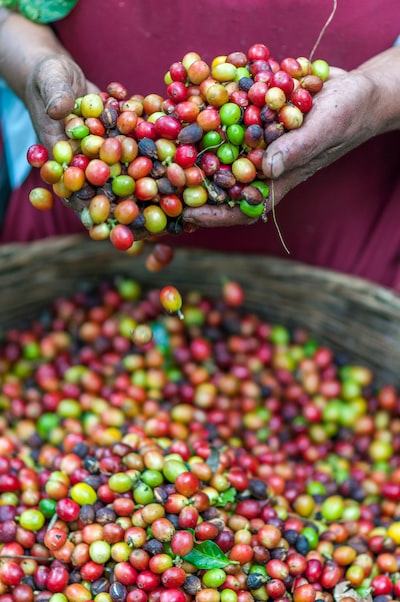
Arbuckle Bros. was, by Ukers’ description, “the world’s greatest coffee business” — a Brooklyn roasting operation with a plant capacity of 8,000 to 9,000 bags a day, green-coffee offices in Rio de Janeiro, Santos and Victoria in Brazil and in Jalapa, Cordoba and Coatepec in Mexico, and more than a hundred stock depots across the United States. Its volume brand, Ariosa, at its peak shipped more than 800,000 packages a day.
Yuban was the top of that range, and it arrived late in the firm’s independent life. Ukers records that John Arbuckle “died at his Brooklyn home, March 27, 1912”, childless, after which a new partnership of family members carried the business on under the same name. Yuban launched the following year.
The brand later passed out of the family and into the large American food groups — it is widely reported that General Foods acquired the Arbuckle brand names in 1937 — and from there through the corporate chain that ends at Kraft Heinz. We could not open a contemporaneous record of the 1937 sale, so treat that date as reported rather than verified here. The Kraft Heinz ownership at the other end of the chain is verified, above.
Correcting the unsourced “Yuletide Banquet” origin story
This page was written in 2023 and asserted several things it could not support. Rather than deleting them silently:
- It stated as fact that “the name ‘Yuban’ … [is] derived from the words ‘Yuletide Banquet'”, and repeated it twice more further down. That etymology is a widely repeated story, not a documented one. Ukers’ 1922 history — written while Arbuckle Bros. was still a going concern and which devotes pages to Yuban’s advertising — never mentions a Yuletide banquet or explains the name at all. Mark Pendergrast, in Uncommon Grounds: The History of Coffee and How It Transformed Our World, records the Yuletide Banquet story and adds that the name was more likely coined simply to sound aristocratic. The honest answer is that nobody has produced a contemporaneous source for what “Yuban” means.
- It described 1960s–1970s “golden years”, a late-century “decline”, unnamed “controversies” about a changed formulation, and a present-day “resurgence”. None of that was sourced, and we could not source it. It has been removed rather than rewritten with different adjectives.
- It said the brand has “a commitment to sourcing its coffee beans from Rainforest Alliance Certified farms”, which reads as a claim about the whole product line. Kraft Heinz publishes no such blanket claim that we could open in 2026. Any certification claim that applies to a Yuban product will be on the pack and in that product’s Kraft Heinz SmartLabel entry; check there rather than trusting a general statement.
- It claimed Yuban “was one of the first to introduce the concept of premium coffee to the masses” and set standards “other brands have strived to emulate”. Ukers does credit Yuban’s advertising as an unusually good example for the trade at the time, calling it “one of the most notable examples of how to advertise coffee well”. That is a claim about advertising copy in 1922, not about inventing premium coffee.
Yuban in 2026
Yuban is still sold, still made by Kraft Heinz, and is positioned as a mainstream canister coffee — the opposite end of the market from the premium position it was created for in 1913. Two small details tell you where the brand sits today:
- It has no live website of its own. Requesting yuban.com redirects to a long-dead Kraft Foods customer-service error page. Product information lives on Kraft Heinz’s SmartLabel service instead.
- Its owner has been rearranging around it. Kraft Heinz announced in 2025 that it would separate into two companies, with legacy grocery brands including Maxwell House going to a North American grocery business. On 11 February 2026 the company paused that separation, with new chief executive Steve Cahillane saying his “number one priority is returning the business to profitable growth”. If Yuban changes hands again, that is the process it will happen through.
Because the line-up and pricing change without notice, this page does not list current Yuban products or prices — anything we printed would be stale within a season. The current range is on the retailer shelf.
Affiliate disclosure: the link below is a paid link. As an Amazon Associate I earn from qualifying purchases. You pay the same price either way. We have not tasted any current Yuban product, and this is not a recommendation over any other coffee — it is a link to the current listings so you can read the pack details and roast dates yourself.
For more on how American coffee brands got here, see our page on American coffee beans and Hawaii’s growing history. If you are trying to work out what “house blend” and similar supermarket descriptors actually commit a roaster to, see what house blend coffee means.

It was THE coffee served in my in-laws home in California and they were the ones who introduced it to me. It is still the best coffee to start and end any day AND in between for a little pick me up. Glad you are still in business and hope you will be for a very long time…we will continue to tell people who dine with us and who remark about the delicious brand of coffee and out comes the canister of coffee to show them what to buy. Doing our part.